⋅ X min read
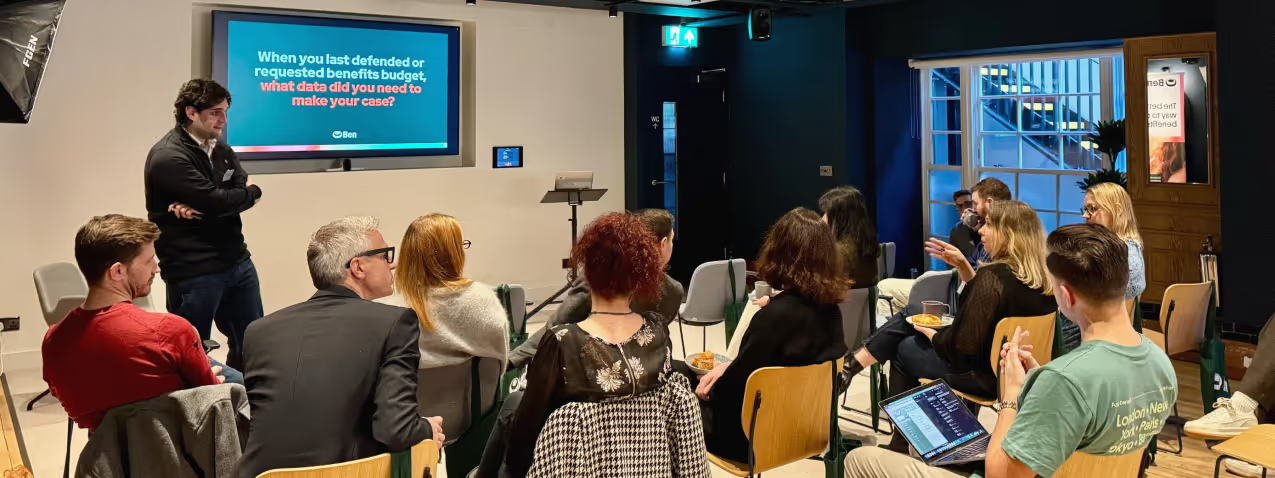
When was the last time you had to defend a benefits budget — and felt genuinely confident in the data you were using?
That was the first question we put to the room at Ben’s Q1 Product Innovation Forum. And the reaction was immediate.
Most leaders didn’t lack data. They had plenty of it. What they lacked was confidence: confidence that the numbers would stand up to scrutiny, confidence that they explained why a benefit mattered (not just how often it was used), and confidence they could justify decisions when budgets were tight and questions were sharp.
That gap — between data and confidence — defined the conversation.
Why this question feels harder than ever
In 2026, benefits decisions sit under a brighter spotlight than they used to.
Healthcare and insurance costs continue to rise. Boards are asking tougher questions. And Reward and Benefits leaders are increasingly expected to explain not just what they offer, but how it supports a diverse, global workforce in a targeted way.
One leader described a recent renewal where they pulled together everything they could: usage data, cost per head, fragments of people data from different systems. It took time. It was painful. And it still didn’t answer the question they were really being asked:
How are we personalising benefits?
Another shared how hard it is to present a long list of benefits back to leadership. The pressure isn’t to add more. It’s to show that the right benefits are reaching the right people — without defaulting to a one-size-fits-all approach.
That’s where traditional measurement starts to fall apart.
Benefits aren’t e-commerce — so why do we measure them like they are?
Logins, clicks and usage graphs are easy to track. But they’re weak proxies for impact.
They tell you that someone interacted with a benefit — not whether it actually helped.
Take two very different experiences:
- An employee logs in once a year to renew a benefit they value deeply.
- Another logs in repeatedly because they can’t find what they need.
Measured purely on engagement, the first can look like failure and the second like success — when the reality is the opposite.
This is the category mistake many benefits teams are stuck with. Benefits aren’t products people browse for fun. For many, the value lies in reassurance: knowing support exists, understanding what’s covered, and trusting it will be there when it matters.
That’s not an engagement problem. It’s an experience one.
Experience matters as much as activity
This distinction — activity versus experience — sat at the heart of the discussion.
Behavioural data shows where people interact. Sentiment helps explain what actually happened when they did. On their own, both are incomplete. Together, they add context — and context is what leaders need when decisions get hard.
Crucially, this isn’t about collecting more data. It’s about collecting the right signals, at the right moments, and understanding what they mean in reality — not just on a dashboard.
The human reality: fatigue and responsibility
Leaders were clear-eyed about two risks that often get overlooked.
The first is employee fatigue. People are already being contacted by multiple teams, across multiple channels. Add more surveys without care, and the signal degrades fast.
The second is safeguarding. Several leaders raised concerns about serious disclosures appearing in anonymous feedback, with no clear mechanism for responding appropriately.
In those moments, the intention to listen can unintentionally create a gap between what employees think they’ve shared and what the organisation can realistically act on.
The takeaway wasn’t to stop asking for feedback. It was to be far more deliberate about when, how, and why you ask – and what responsibility comes with collecting it.
Insight is only useful if it changes a decision
Collecting feedback, most agreed, isn’t actually the hard part. Acting on it is.
Too often, teams pull together usage reports, survey results and comments — only to hit the same wall: now what? Turning insight into change means coordination across providers, internal alignment, and justification to stakeholders who weren’t part of the nuance behind the numbers.
As one leader put it: if an insight doesn’t help you defend or change something, it’s not really doing its job.
The problem isn’t a lack of dashboards. It’s a lack of confidence in what those dashboards are telling them – and whether they’ll stand up when budget is questioned.
A more practical way to think about benefits impact
To move the conversation forward, we shared a simple framework — not as a reporting exercise, but as a way to anchor measurement to real decisions.
1. Get clear on what you actually offer
Before you can measure impact, you need a single, shared view of every benefit across regions and employee groups. If something isn’t visible in one place, it rarely gets measured properly — or challenged with confidence.
2. Define how each benefit creates value
Not all benefits deliver value in the same way. For some, value shows up in action: spending an allowance, submitting a claim, accessing support. For others, value is awareness: knowing a benefit exists and how to use it when needed. Treating these as interchangeable leads to misleading conclusions.
3. Capture sentiment at the right moment
Quantitative signals show what’s happening. Sentiment explains how it’s experienced — but timing matters. Generic, annual surveys came under heavy scrutiny. Feedback captured closer to the moment of use, and tailored to the benefit in question, was seen as far more meaningful.
Together, these steps help shift measurement away from activity tracking and towards something more useful: understanding impact.
From reporting to leadership, to leading the conversation
What stood out most from the forum wasn’t a single metric or feature idea. It was a shared ambition.
Reward and Benefits leaders don’t want more data for the sake of it. They want insight they can stand behind – that helps them defend what matters, challenge what doesn’t, and make confident decisions in complex organisations.
That’s what moves benefits strategy from box-ticking to real impact. And it’s what starts to position Reward and Benefits teams as strategic business leaders, not cost centres.
Want to be part of the next conversation?
Ben’s Product Innovation Forums bring together a hand-picked group of senior Reward and Benefits leaders from complex, global organisations to talk honestly about what’s changing – and what actually helps. We meet every quarter for a working breakfast of practical discussion, new innovation and space to challenge assumptions.
If you’re a Reward or Benefits leader and this kind of conversation sounds useful, get in touch with the Ben team to register your interest for a future session.
.avif)