⋅ X min read
Most benefits platforms will tell you that they personalise the employee experience and increase engagement. This might sound great on a sales call, but we think that framing is wrong, and that it's asking employers to measure the wrong things.
Engagement tells you how often employees come back to the platform. Personalisation tells you the system knows something about them. Neither tells you whether they got what they came for. That's the only measure that matters. And most platforms don't optimise for it at all.
At Ben we think about it differently. What we optimise for is relevance and time to value. Did the employee land on something that made sense for them? Did they get to what they needed without unnecessary steps? Those are the two questions worth asking. They map to the two jobs a benefits platform exists to do.
- Discovery: an employee doesn't know what they have, or what's relevant to them right now, and the platform surfaces it.
- Action: an employee knows exactly what they need, and the platform gets them there as fast as possible. Everything else is noise.
The majority of benefits platforms provide a catalogue — a list of everything, maybe filtered by topic or targeted based on location or eligibility — and expect employees to find their own way through it. Most leave without finding what they need, and the benefits investment goes unseen and unappreciated.
That's what we're building to fix. Today, we'll share the first part of that work, along with what's coming next.
A homepage for benefits leaders who think like marketers
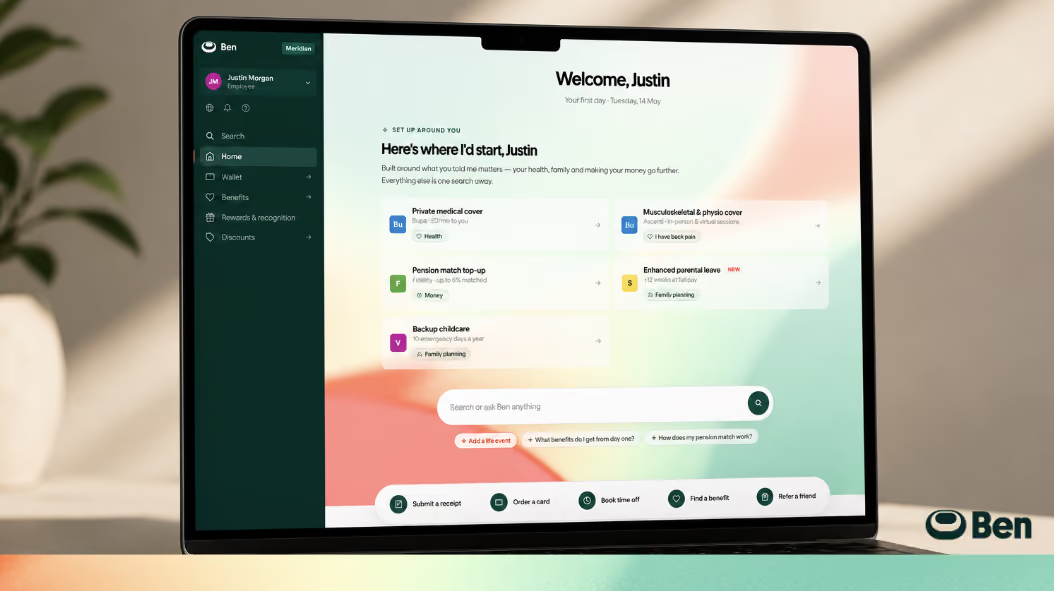
Ben's homepage is now a fully configurable system. Employers can shape what employees see when they land on the platform — the structure, the content, the groupings, and how it all looks — within a guard-railed framework that keeps the experience coherent.
It's built from composable blocks: carousels, featured tiles, lists, grids. Each is designed around a specific employee job rather than just displaying available content.
Employers choose which blocks appear and in what order, how benefits, allowances, resources, and other content are grouped and labelled, target content at specific employee cohorts so the right messages reach the right people, and control how the overall page looks and feels.
Different organisations run their benefits programmes differently. Some lead with allowances. Others have a rich benefits catalogue that deserves to be front and centre. Others want to draw attention to a specific product area or piece of content. Our aim is to give benefits leaders the tools to market their programme — without needing the marketing team to go with it.
The configurable homepage gives employers a framework to build the experience intentionally — no generic defaults, no empty white space where content should be, proper branding and a homepage that helps employees truly feel the investment you put into them.
This is the foundation, not the finish line
A configurable homepage is a meaningful improvement. But the reason we built it this way — as a structured, composable system rather than a set of fixed templates — is because of what it enables.
Relevance at the level we're building towards doesn't come from showing employees more content. It comes from understanding where they are and what they need at a given moment, and surfacing the right thing accordingly. That requires a platform homepage that's been designed for it. A generic homepage can't carry that kind of intelligence. This one can.
What's coming next: The AI layer
The next phase of this work is coming soon. Here's where it's heading.
Feature in development. Actual product experience may vary.
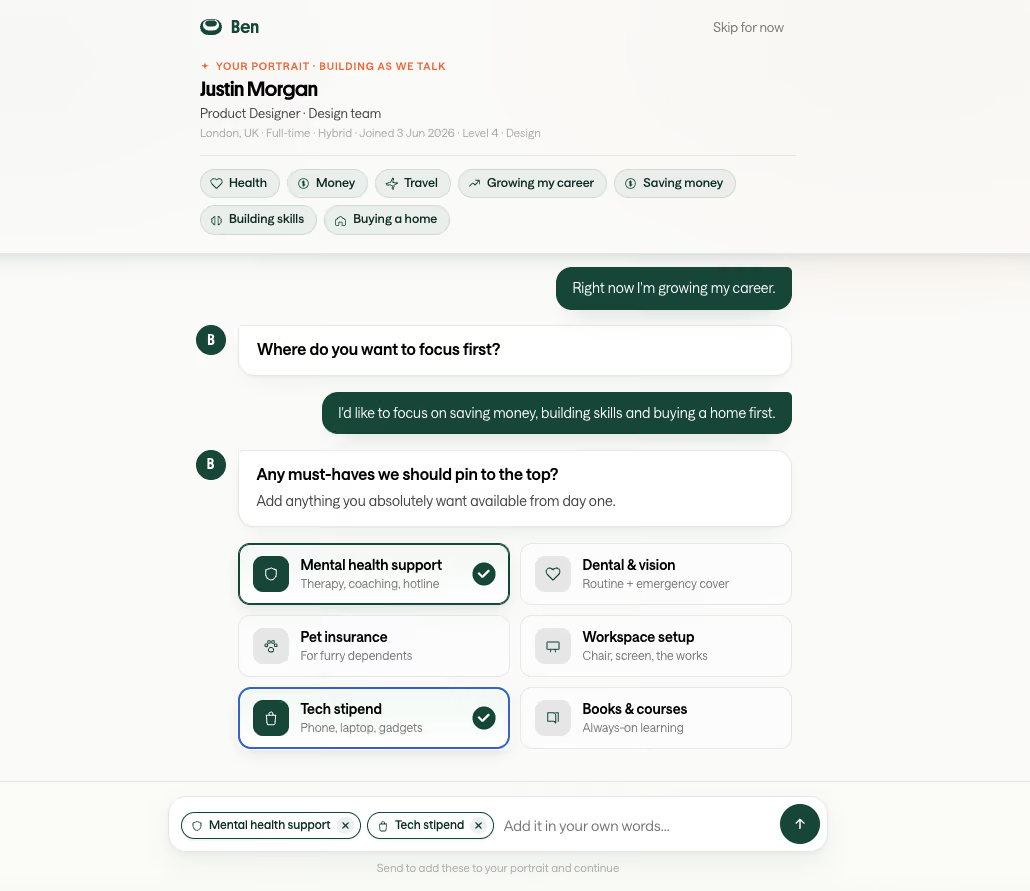
1. Onboarding with conversational AI
When an employee logs into the platform for the first time, they'll enter a conversational onboarding process with Ben’s AI. They answer questions about what matters most to them right now, then Ben uses the answers to build their first landing experience around the benefits most relevant to them - with a clear reason why each one is being shown.
This is approach goes further than the generic ‘personalisation’ options offered by the majority of benefits platforms.
Rather than inferring preferences from basic information like location, age and role, we also capture specific detail on what that employee cares about.
An employee who says commuting and gym costs matter to them shouldn't have to find those benefits through browsing. They should see them as soon as they land on the homepage.
2. A homepage that responds to what matters, right now
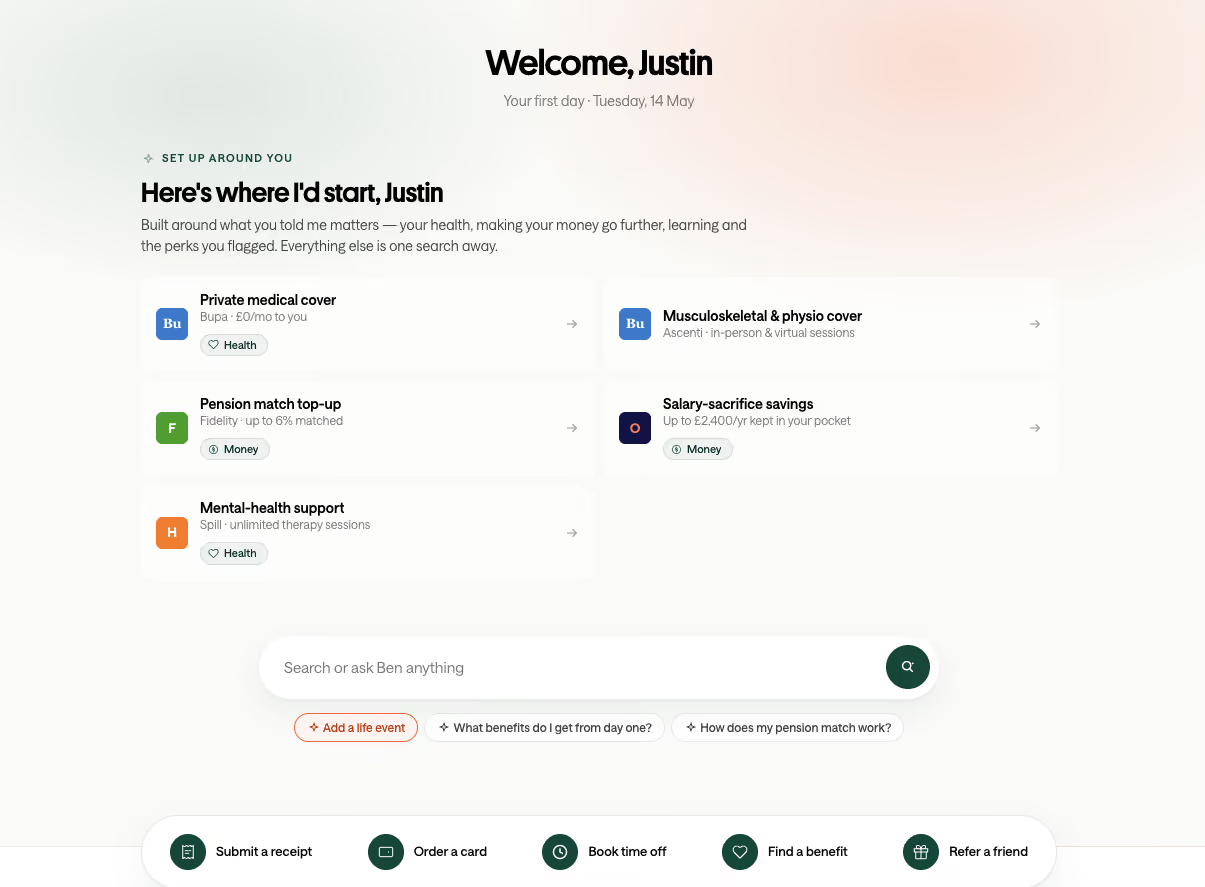
As employees use the platform, the homepage will start responding to where they are in their benefits lifecycle rather than just displaying a static set of content.
An allowance that's about to lapse gets surfaced before it's lost. An enrolment window that's just opened is highlighted. If someone adds a life event — like having a baby — their homepage will adapt to that and bring newly-relevant benefits to the front.
The measure of success here isn't how often employees engage with the homepage. It's how many of those interactions lead somewhere genuinely useful.
3. Search that keeps up with the question
BenAI search is being rebuilt to handle more complex, multi-step questions and respond faster.
Search is often where an employee goes when they have a specific, immediate need. If the experience there is slow or returns something unhelpful, they give up. Getting this right is one of the fastest ways to improve time to value across the whole platform.
The thread running through all of it
The configurable homepage, the relevance layer at onboarding, the context-aware recommendations, the faster search — these aren't separate features. They're pieces of the same thing: a platform that knows the difference between showing employees what exists and helping them get to what matters.
We'll have more to share as each piece ships. In the meantime, if you'd like to see how the configurable homepage would work for your business, book a demo.
.avif)
.avif)